Care That Fits Family Life
Between school drop-offs, work, and caring for relatives, finding time for a medical appointment can be a challenge for Queens families. When children and adults need care, coordinating visits across different offices can add another task to an already full week.
For some follow-ups, a video visit can make it easier to check in without traveling to the office. It may suit conversations about ongoing care or medication, but it cannot replace every examination or test. Your clinician can help decide which format fits the concern; telehealth is best treated as a supplement to in-person care, not a replacement, as described in this review of telehealth benefits and barriers.
In Forest Hills, Maged Youssef, MD, FAAP provides pediatric and adult primary care in one practice. His more than 30 years of experience and training in both pediatrics and internal medicine offer a helpful foundation for discussing follow-up options for patients of different ages. Video visits are available for many follow-ups, while concerns that need a hands-on exam can be handled in person.
What Video Visits Can Offer
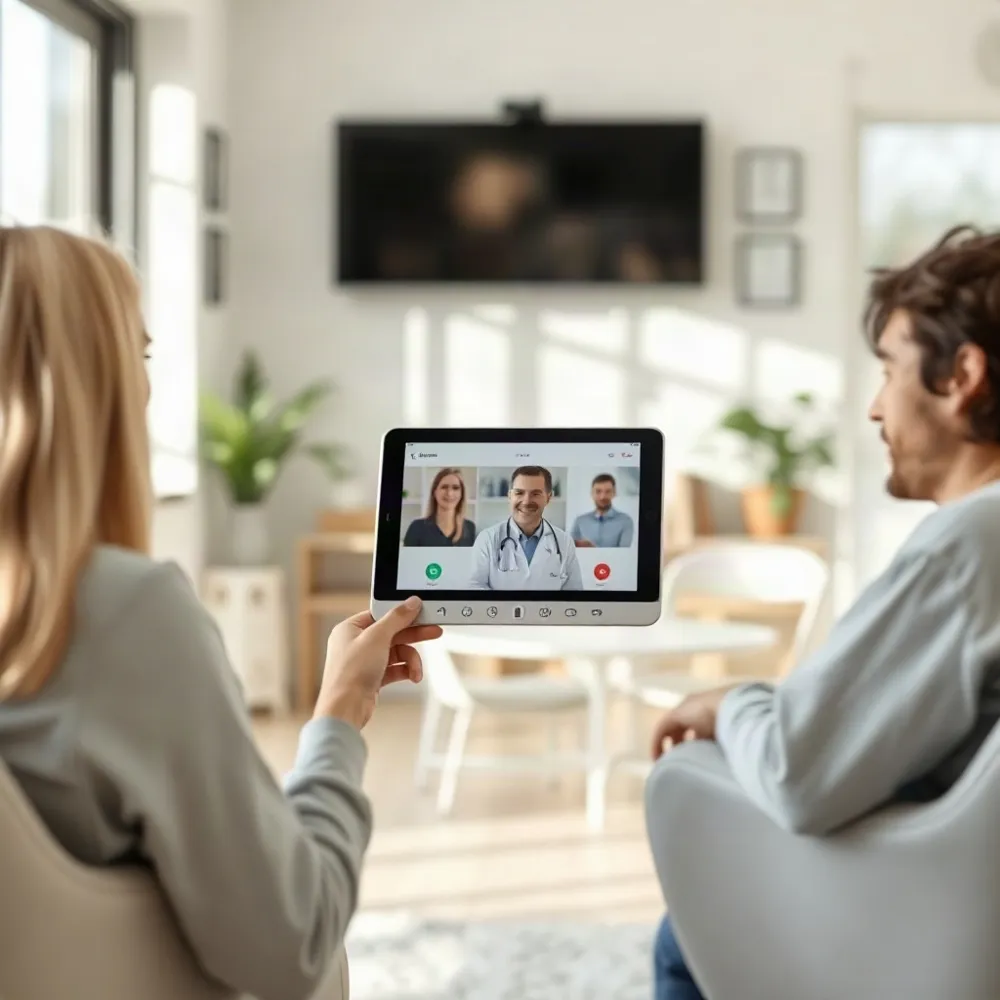 A video visit is a face-to-face appointment with your clinician over a video call, using a phone, tablet, or computer instead of meeting in the same room. For families in Queens, it may make some follow-ups easier to fit around work, school, and caregiving by avoiding a trip to the office.
Dr. Youssef offers video visits for many follow-ups, bringing pediatric and adult care together in a practice led by a physician with more than 30 years of experience. A video appointment may be useful when the clinician can discuss your concern and assess what is visible on screen.
For example, patients may use video to review test results, ask medication questions, check in about an ongoing concern such as asthma, or discuss recovery. Telemedicine can support follow-ups that mainly involve conversation, though the right format depends on the person and the reason for the visit.
A clinician may also be able to discuss concerns such as asthma or allergies by video, but some conditions still need an in-person assessment. Video does not allow a hands-on examination, and the clinician may recommend an office visit if they need to examine your child or you more closely.
Before scheduling, ask the office whether video is appropriate for your concern or your child’s. The care team can help decide whether a conversation and visual check are enough, or whether an in-person visit is the better next step.
Choosing Video or In Person
 Video visits can save Queens families a trip and make it easier to fit follow-up care around work, school, and caregiving. They may work well for conversations about medication, test results, or ongoing concerns such as asthma, when a hands-on examination is not needed. Telemedicine can support suitable follow-ups, but it is an addition to in-person care, not a substitute for every appointment.
At Maged Youssef, MD, FAAP’s Forest Hills practice, pediatric and adult primary care are offered under one roof, and video visits are available for many follow-ups. The doctor’s board certification in pediatrics and internal medicine, along with more than 30 years of experience, supports care for family members at different ages. Whether a video appointment is suitable still depends on what the patient needs.
A video call cannot provide every part of a physical examination. Your doctor may need to see you in person to check a new or worsening concern, take a sample, arrange imaging or lab work, or perform a procedure. Some symptoms also require other evaluation that cannot be completed remotely. Telehealth has limits when a clinician needs to examine the body directly, so the safest visit type depends on the concern.
If symptoms are new, getting worse, or worrying you, contact the practice for guidance rather than assuming a video visit is enough or waiting for a routine appointment. Dr. Youssef can recommend an in-person visit or a higher level of care when needed. For severe symptoms such as chest pain or trouble breathing, seek urgent care or emergency help; a routine video visit is not an emergency service.
Getting Ready for Your Appointment

How can I prepare for a video visit with my doctor?
A little preparation can help your appointment start smoothly. Use a phone, tablet, or computer with a working camera and microphone, and follow the office’s instructions for opening the visit. Check the link or app and your internet connection ahead of time. Keep your device charged or plugged in so the appointment is less likely to be interrupted.
Choose a quiet, private, well-lit spot where you can speak openly and your doctor can see you clearly. Headphones may help you hear, but try to find a place where others cannot overhear sensitive details. A quiet, private space and working device can make it easier to focus on the conversation.
Before the call, write down your symptoms and questions, and gather your current prescription and nonprescription medicines. If you have recent readings, such as temperature or blood pressure, keep them nearby. For a rash or another visible concern, find good light and be ready to show the area on camera. Your doctor may still recommend an in-person examination if seeing the concern on screen is not enough.
At Dr. Youssef's family-focused Forest Hills practice, video visits are available for many follow-ups, with pediatric and adult care under one roof. Families can review how video visits support primary care access and contact the office if they need help connecting or are unsure whether their concern can be handled by video. With more than 30 years of experience and board certification in pediatrics and internal medicine, Dr. Youssef can help determine whether a remote visit or an in-person appointment is the right next step.
Privacy and Comfort at Home
A private setting helps you speak openly during a video visit. Someone nearby might hear your health conversation even if they are outside the camera’s view, so choose a quiet room where you are less likely to be interrupted.
Headphones or earbuds can make it easier to hear the clinician and reduce background noise. They do not stop other people from hearing your side of the conversation, so consider whether you can speak comfortably in that space.
Privacy can be harder when a home is shared or a quiet room is not available, and not everyone feels equally comfortable using video technology. These concerns do not automatically mean you should skip care. Patients of all ages can discuss their options with Maged Youssef, MD, FAAP, whose Forest Hills practice provides pediatric and adult care for families in Queens. With more than 30 years of experience, he can help determine whether a video follow-up fits your needs or an in-person visit would be more appropriate.
A Follow-Up Plan That Fits
A video visit can make some follow-ups easier to fit into family life, but it cannot replace every in-person appointment. When a concern needs a hands-on exam, testing, or another closer assessment, your clinician may recommend coming to the office. Telemedicine guidance emphasizes matching the visit format to the care needed.
Before scheduling, ask the office whether video or an in-person visit is the better fit for your concern, and follow the clinician’s advice if an examination is needed. In Forest Hills, Maged Youssef, MD, FAAP provides pediatric and adult primary care in one practice, so families can discuss the next step for a child or adult with a physician experienced in caring for both.
The right plan is the one that supports each patient’s needs. For some follow-ups, a video visit may be convenient; for others, meeting in person is the safest way to assess what is going on.